At HCA, we are pioneers in child art. We believe that child art must be pure, genuine, and uninterrupted.
We inspire our students to develop their observation skills and imagination. They’re given a lot of freedom to create their art based on their imagination. At HCA, the apple doesn’t necessarily need to be red or a tree doesn’t need to be green only. Panchal Sir strongly believes that only the freedom of imagination can create art. We respect the emotions and imaginations of our kids.
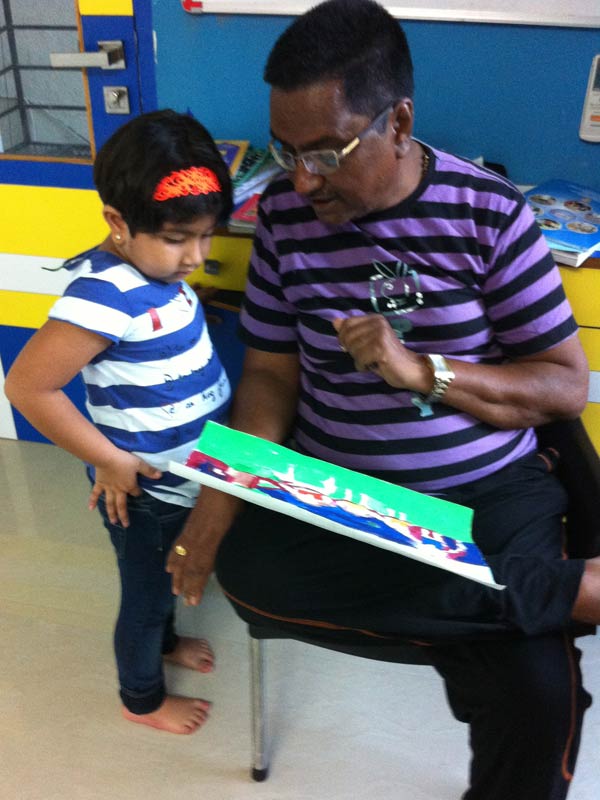
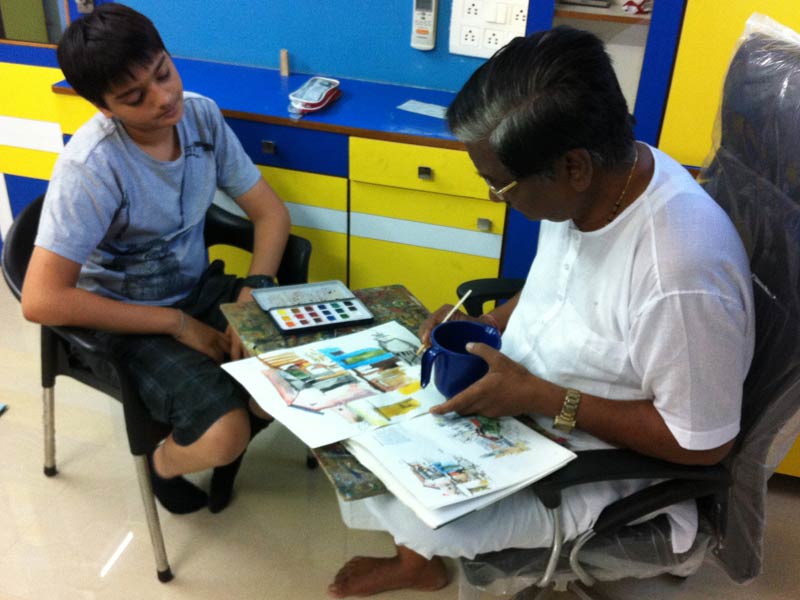
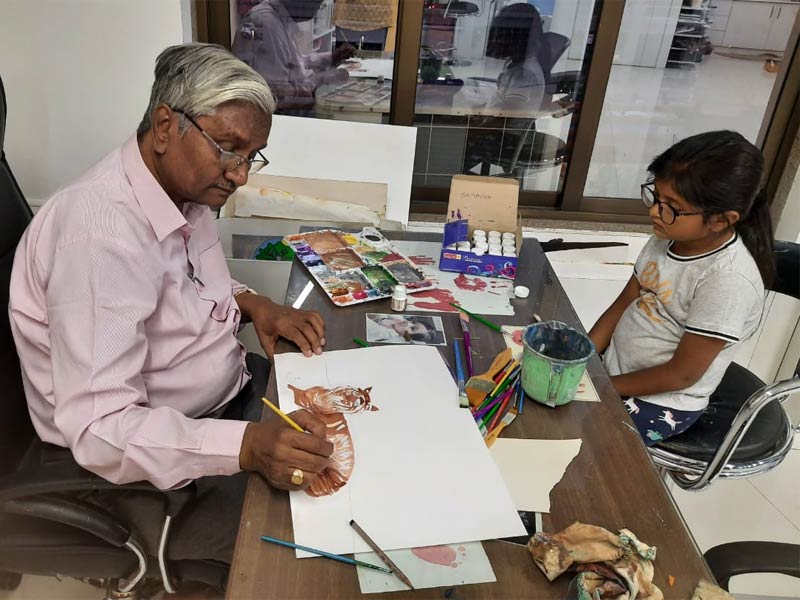
Imitating someone else’s picture can be satisfying to a certain degree, yet gradually it confines the imagination in a circle. When our students come to us with their creations, we do not interrupt their process of creation. We guide the verbally, and if necessary, show them through creating something on a different piece of paper. This way, we keep their art intact preserving its genuineness… and they know it belongs only to them and is not a shared project. In Europe, Japan, or any other mature society, they demand pure and genuine child art only… which must be created by one particular child, and that too without help from a teacher, parent, or a guide.
As a tutor, we first and foremost give the freedom to our students to think beyond boundaries. For example, a 4-year-old kid has his own world of imagination. Most of the fascinating things to him might be chocolates, toys, games, friends, school, parents, grandparents, etc. So, he can imagine any scene with these characters. And actually kids do that. If he remembers a recent birthday party of a friend, he could recreate the scene on paper. Obviously, the creation would not look as attractive as his imagination, as his tiny hands are not trained to pour his mind onto the paper. So, our role is, to notice his efforts and appreciate him for that.
We suggest a few gentle changes that would only enhance his creation without altering his imagination. And it all happens in form of subtle questions and suggestions. This way students easily notice their errors and usually don’t repeat them.